
The Key SaaS Unit Economics
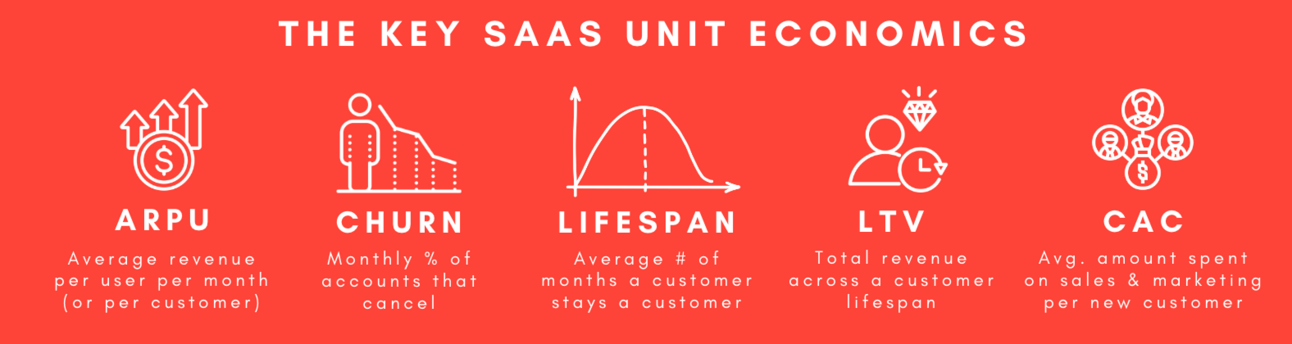
In any recurring revenue business, there are a few key unit economics which help you understand the profitability of each individual customer. Let’s begin with some definitions.- ARPA — Average Revenue Per User (or per customer) per month. Sometimes called ARPU if it’s on a per user basis.
- Account Churn — The monthly % of accounts that cancel. When calculating average lifespan, be sure to use account churn % not revenue churn percentage.
- Lifespan — The average # of months a customer stays a customer (estimate by dividing 1/Monthly Account Churn Rate)
- Lifetime Value — Total revenue across an average customer’s lifetime (ARPU × Lifespan)
- Customer Acquisition Cost — The average amount spent on sales and marketing per new customer.
What Were Our Actual Numbers?
At iContact our ARPU was $59/mo, our account churn rate was 3.2% per month, our average customer lifespan was 32 months (1/0.032), our lifetime value (LTV) was $1,860, and our CAC was $650.$59/mo
ARPU
3.2%
Monthly Churn
32 mo
Avg Lifespan
2.86x
LTV:CAC Ratio
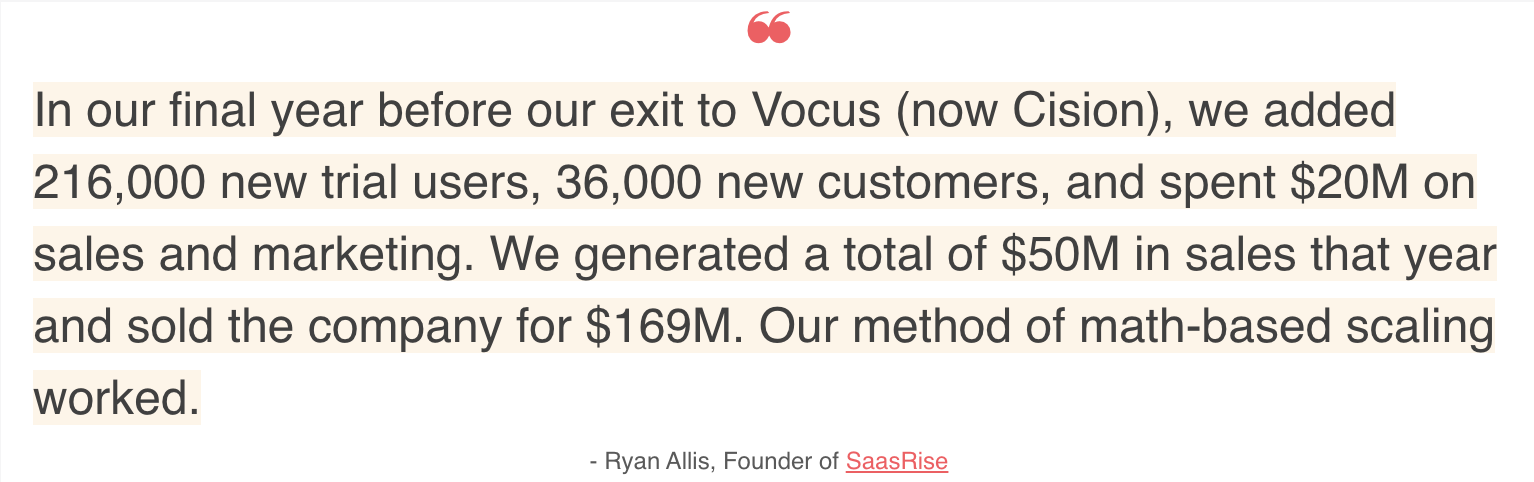
Throughout this process, we got very good at the process of customer acquisition and SaaS unit economics. We were essentially turning $1 in spend into ~$3 in revenue (and $6 in added enterprise value), over and over and over again.
When to Scale vs. When to Improve
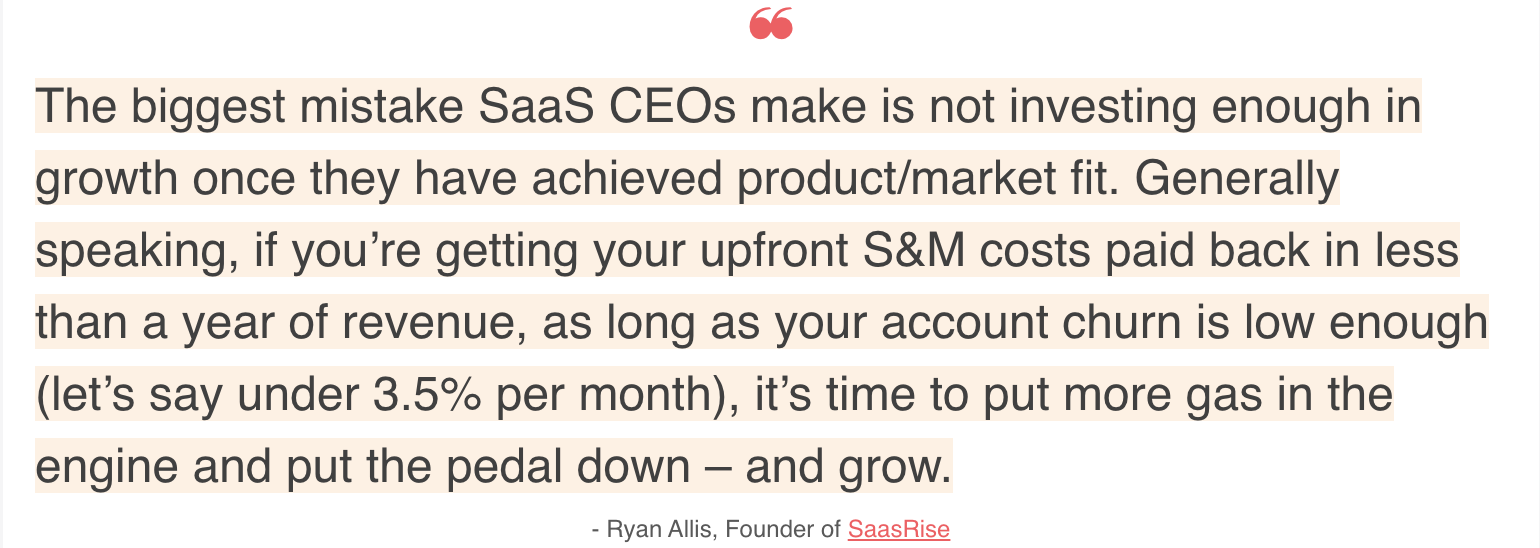
At a high level, if your company’s account churn is under 3.5% per month and your CAC is less than 1/6th of your LTV, it’s time to scale up your sales and marketing efforts — and grow faster. If your account churn is over roughly 3.5% per month, you’re in a yellow zone and it’s important to slow down and focus on product improvement, account management, integrations, and stickiness before you scale up your paid sales and marketing engines any further. You should always work on reducing churn — it’s an ongoing process. But once you get your customer life to be above 30 months (which happens at 3.5% monthly churn), it’s critical to begin rapidly scaling up the top of your funnel while you make continual improvements to the bottom of the leaky bucket of account churn. In addition to looking at payment months, look at LTV:CAC ratio. If your expected average lifetime revenue (LTV) from an incremental new customer is more than 6 times your upfront cost of customer acquisition, scale up that system all day long.
LTV:CAC ratios depend on whether you’re venture-backed or trying to be profitable. Here’s a good rubric:
- 8:1 Ratio — Optimizing for profitability
- 6:1 Ratio — Optimizing for a balance of profitability and growth
- 4:1 Ratio — Optimizing for growth (usually VC-backed)
The Actual Unit Economics for Our Two Market Segments: SMB and Enterprise
At iContact, we built two different product offerings targeted at different market segments: iContact and iContact Enterprise. Each of these products had their own unique unit economics. iContact was targeted at small businesses who paid on average $36/mo (range of $10/mo to $1,000/mo) and iContact Enterprise was targeted at mid-sized businesses and larger senders who paid an average of $1,190 per month (range of $800/mo to $50k/mo). It was essentially the same product with a couple added features and access to a shared account manager. We marketed iContact via Google search ads, resellers, affiliates, online review sites, SEO, postcards, and radio ads. We offered a 15 day free trial and converted about 16% of our free trials into paying customers via an automated email follow-up sequence. At the peak we were adding 18,000 new free trials per month. Later on, we switched to a freemium model (free for small accounts under 1,000 subscribers), which initially performed worse, but after the network effect took place it ended up performing better for us than a free trial. iContact Enterprise was marketed via similar channels — with the only difference being that prospects had to already have 50,000 subscribers on their email list (we asked at the time of trial signup) before we’d invest the time/money to approach them with the Enterprise offering. If the prospect indicated they had that scale already, we’d have a sales development rep (SDR) call them to set up a demo. Once our SDRs had validated that the client had the list size and the budget, they’d pass the opportunity to a Sales Executive to close the deal. Once the account was closed, they’d be passed over to an Account Manager to manage and grow the client revenue. Land and expand. Because we knew our unit economics cold, we were able to get solid investment term sheets from Bessemer, Updata, JMI Equity — and our eventual buyer.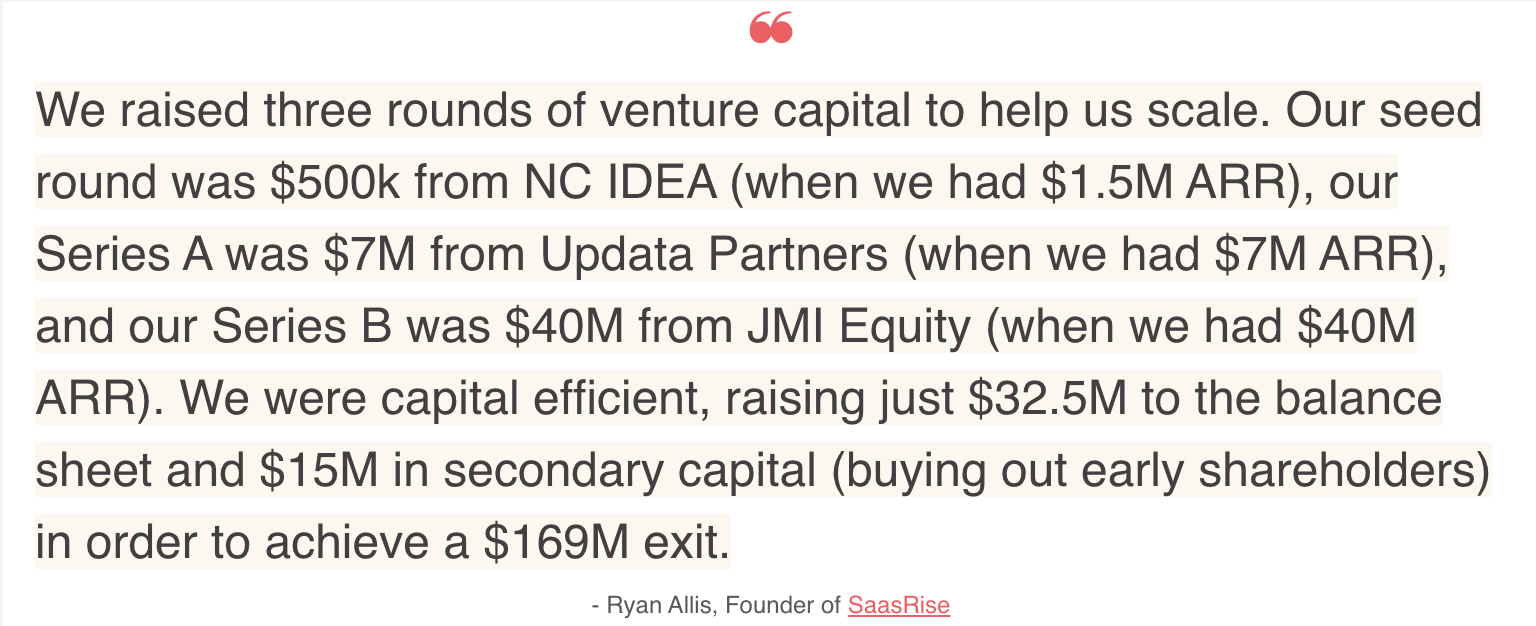
The Actual Unit Economics at iContact
Let’s start with a recap of our numbers at iContact. At iContact, we had two parts of our business with two different unit economics and sales approaches. At the time we sold the company, these were our approximate unit economics.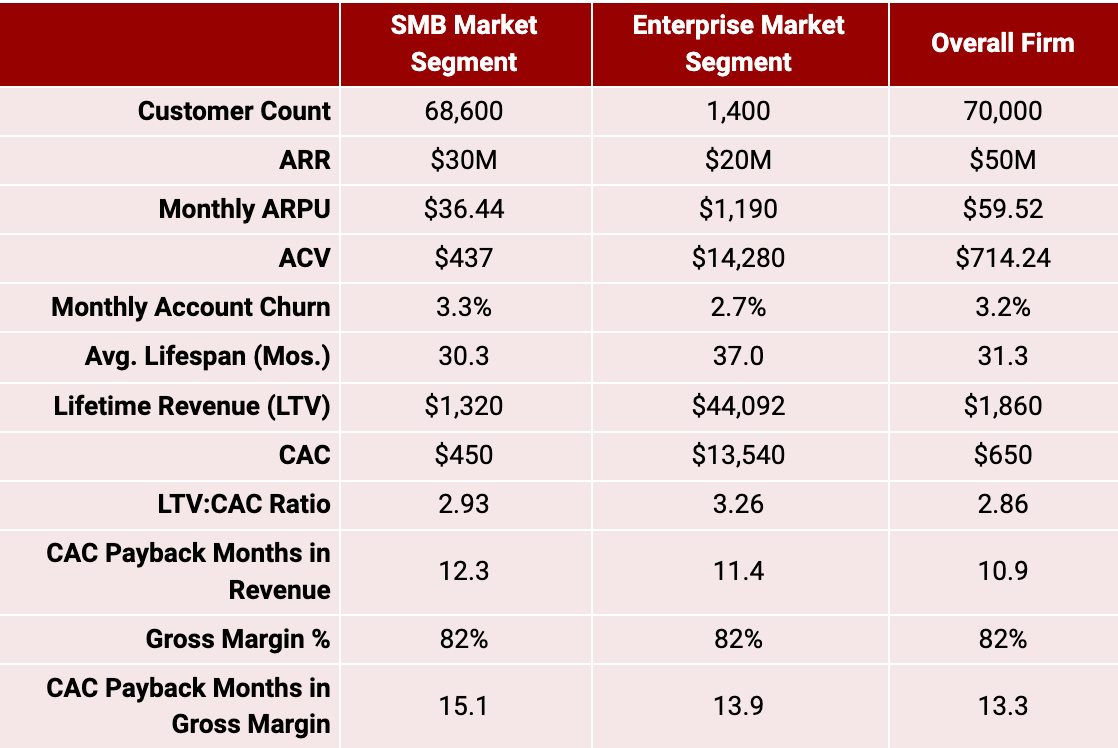
Ideal Ranges for SaaS Unit Economics
Here are some target unit economic ranges you should aim for in your recurring revenue SaaS company, noting that if your account churn is exceptionally low (<2% per month) you may be able to afford more than 12 months of revenue in upfront Sales & Marketing Costs and still build a strong firm. Some venture-backed firms will even accept 15-18 month payback windows if their account churn is <1.5% per month.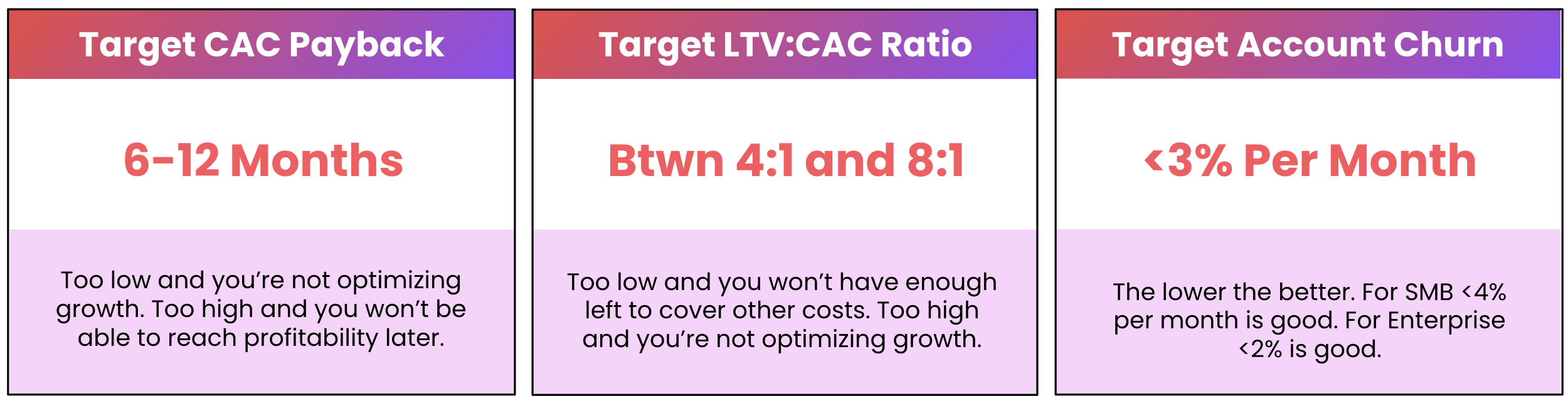
Like data-driven SaaS content like this? Apply to join the SaasRise mastermind community for CEOs & Founders with $1M to $100M in ARR.
Apply to Join The Community →